The wrong thing didn't get built
Discovery work that changed the direction of a digital advice proposition before anything was built.
Focus / aberdeen
How it started
The brief was clear: build a digital advice journey that takes a customer from first enquiry to investment recommendation without any human involvement. The case for it was commercial. The problem was that neither users nor advisers would use it.
I led the discovery work that found this out before anything was built.
I was UCD Practice Lead at Focus, working with the investment proposition team on a new digital advice service for a major financial advice network (NDA). I set up and ran all the research: recruited participants through a specialist firm, wrote discussion guides and consent forms, built the prototypes used in testing, and ran the sessions. The project team joined as observers and note-takers. I drove the synthesis and framing of the insights.
What the brief got wrong
The network wanted to offer digital advice as a standalone proposition. A prospective client finds the service, completes a fact-find, receives a recommendation, and invests. No adviser contact required.
The assumptions behind this were reasonable. Digital financial services were growing. Costs of human-led advice were high. Younger clients were underserved. There was a clear commercial logic.
What users said was different.
Nine consumer interviews showed a consistent picture. Trust was the central issue, not technology. Users were open to digital tools, but only after they had a relationship with someone behind the service. Without that, they would not commit. "I want to speak to somebody, to know who they are." "Personal connection is key." "With trust in place, digital advice is acceptable."
Investments were also deeply misunderstood. Users did not see investing as a route to goals. They saw it as gambling. "Investing is like walking into a betting shop." "With stocks, I don't expect to get that money back." They kept goals in savings accounts and thought of investments as money they could afford to lose. The service was being designed for a user relationship with investing that simply did not exist.
Four adviser firm interviews reinforced the picture from the supply side. Three of the four had changed their thinking since the project started. They no longer wanted to send clients straight into a digital journey. They wanted a human meeting first. "Passive digital experience won't work, support from an adviser is required." One firm was the outlier, swamped with low-value referrals and unwilling to rely on a human interaction. One out of four.
The network wanted to offer digital advice as a standalone proposition. A prospective client finds the service, completes a fact-find, receives a recommendation, and invests. No adviser contact required.
The assumptions behind this were reasonable. Digital financial services were growing. Costs of human-led advice were high. Younger clients were underserved. There was a clear commercial logic.
What users said was different.
Nine consumer interviews showed a consistent picture. Trust was the central issue, not technology. Users were open to digital tools, but only after they had a relationship with someone behind the service. Without that, they would not commit. "I want to speak to somebody, to know who they are." "Personal connection is key." "With trust in place, digital advice is acceptable."
With stocks, I don't expect to get that money back
Investing is like going to a casino
Investments were also deeply misunderstood. Users did not see investing as a route to goals. They saw it as gambling. "Investing is like walking into a betting shop." "With stocks, I don't expect to get that money back." They kept goals in savings accounts and thought of investments as money they could afford to lose. The service was being designed for a user relationship with investing that simply did not exist.
Four adviser firm interviews reinforced the picture from the supply side. Three of the four had changed their thinking since the project started. They no longer wanted to send clients straight into a digital journey. They wanted a human meeting first. "Passive digital experience won't work, support from an adviser is required." One firm was the outlier, swamped with low-value referrals and unwilling to rely on a human interaction. One out of four.
The research pointed to one viable model: a human touchpoint first, then digital. Not instead of digital, but as the gateway to it.
I proposed a post-digital triage approach: a simple digital screening to assess appropriateness, followed by a meeting with an adviser, after which the client enters the digital advice journey with the adviser's referral already in place. The client arrives already knowing who is behind the service. The trust problem is solved before the tool opens.
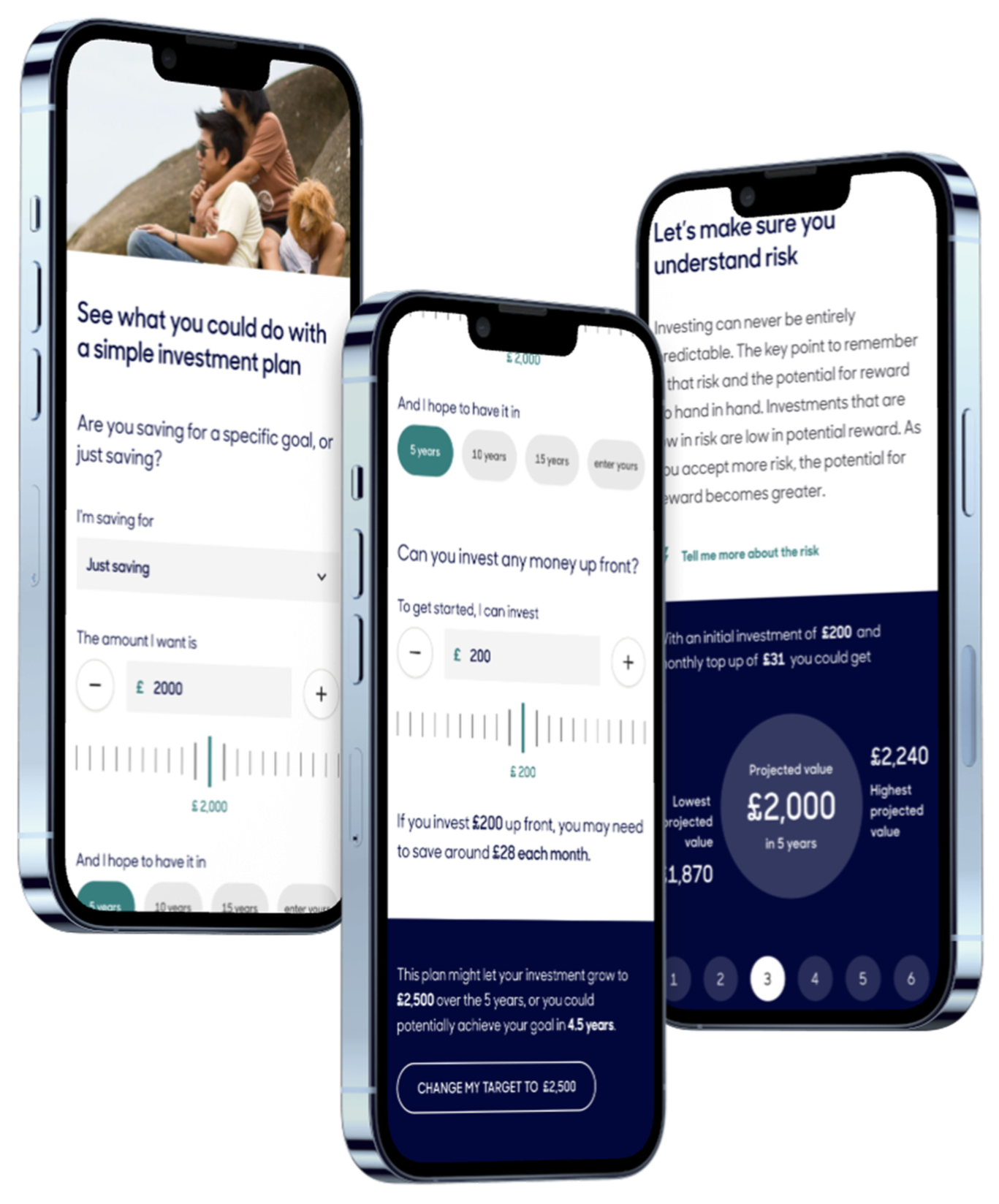
Six prototype tests validated this. The prototype, a mobile-first digital advice tool that opened with the adviser's referral, moved users through goal-setting, risk assessment, and an investment recommendation. Users engaged with it. The risk questionnaire built confidence. "I am a risky person... Balanced, hmmm, that description seems right." "I like this, it's my time for my benefit."
Testing also confirmed one critical finding: users wanted to pause at the advice output stage, think, and do their own research before committing. This was not a design flaw. It was a natural consequence of taking money seriously. The no-human advice brief did not survive contact with users at exactly this point, and the post-digital triage model was the direct response to what that research showed.
What I proposed and tested
The research pointed to one viable model: a human touchpoint first, then digital. Not instead of digital, but as the gateway to it.
I proposed a post-digital triage approach: a simple digital screening to assess appropriateness, followed by a meeting with an adviser, after which the client enters the digital advice journey with the adviser's referral already in place. The client arrives already knowing who is behind the service. The trust problem is solved before the tool opens.
Six prototype tests validated this. The prototype, a mobile-first digital advice tool that opened with the adviser's referral, moved users through goal-setting, risk assessment, and an investment recommendation. Users engaged with it. The risk questionnaire built confidence. "I am a risky person... Balanced, hmmm, that description seems right." "I like this, it's my time for my benefit."
Testing also confirmed one critical finding: users wanted to pause at the advice output stage, think, and do their own research before committing. This was not a design flaw. It was a natural consequence of taking money seriously. The no-human advice brief did not survive contact with users at exactly this point, and the post-digital triage model was the direct response to what that research showed.
What the network adopted
The network adopted the post-digital triage model. The original no-human proposition was not pursued.
Paul Mason, one of the project stakeholders, described the approach as "putting the customer first" and highlighted how the work involved "constructively challenging others when the solution may be being over complicated." Dave Upton, CEO of Focus, wrote that the outcome "stood up well to presentation to major advice firms. Excellent work that needs to be the mainstay of how we do things going forward."
Both parties were better off having caught this before anything was built.